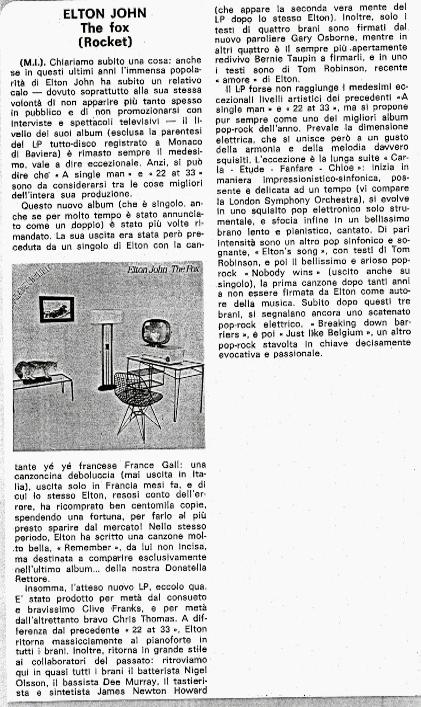
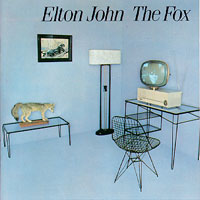
Elton John - The Fox (1981)
1) Breaking
Down Barriers
2)
Heart
In The Right Place
3)
Just
Like Belgium
4)
Nobody
Wins
5)
Fascist
Faces
6)
Carla-Etude*
7)
Fanfare*
8)
Chloe
9)
Heels
Of The Wind
10)
Elton's
Song
11)
The
Fox
* strumentali
classifiche:
Stati
Uniti: 21 posto
Inghilterra:
12 posto
Italia:
--
Manuel Insolera da CIAO 2001 del 1981
da www.debaser.it
Elton John: The Fox
Recensione di: DBalavoine,
(30/03/2006)
Voto: * * * * *
Conosco
molta gente che ostenta la propria non-cultura dal salotto
del proprio monolocale comprato su catalogo Ikea, che vanta molti amici
gay “perché nei locali gay
c’è sempre la musica migliore e poi non
cercano di rimorchiare la tua ragazza”, che comprano i libri
al kilo
nei supermercati e che nella loro vita hanno ascoltato solamente i
greatest hits degli U2, dei Pink Floyd e dei Queen. Conosco fascistoidi
che agitano hot-dog come manganelli deliranti al suono dei Manowar
ignorando che il loro mondo di cuoio, borchie e Harley Davidson sia
stato copiato dal mondo dei marchettari omo americani più di
35 anni
fa. E fa pensare il fatto che tifosi irriducibili di calcio con
rigurgiti neonazisti così attenti alla (loro) sacrosanta
storia non
sappiano che, quando la loro squadra vince, cantano a squarciagola un
epico inno gay partorito dalla mente perversa di un certo Freddie
Mercury.
E poi c’è quel gran volpone di David Bowie.
Rappresenta
per il rock quello che Madonna è da sempre nel
mondo pop. Una micidiale
azienda di marketing precisa come un bisturi. Un camaleonte travestito
da grande artista. Falso come Giuda, basa il suo successo su intuizioni
studiate a tavolino: un giorno i Ragni da Marte, in principio bisex,
poi etero, i Tin Machine…E la sua schizofrenia intesa come
genialità
non è altro che uno stato mentale
dell’esercito vanaglorioso dei suoi
ingenui fans. Ma la maestria di Bowie nel costruirsi una
credibilità di
ferro circondata da un alone di vago misticismo
non è stata la stessa
dell’autore dell’album in questione: Elton John.
Ormai
diventato
una checca sessantenne affettata e
“fashion-victim”, è stato in
realtà
un compositore ed interprete di assoluta grandezza sfornando,
specialmente nei primi anni settanta, album sensazionali, ricchi di
pathos e geniali intuizioni melodiche. Perle come “Tumbleweed
Connection" o “Madman Across The
Water” valgono
da sole l’intera discografia di Bowie. Ma Elton
John è anche andato a
“Buona Domenica” nel 1993, per esempio, deprimendo
i suoi attoniti fans
con un indecente teatrino tra Jerry Scotti e Umberto Smaila. Bowie,
figuriamoci, non l’avrebbe mai fatto.
Elton non ha mai
avuto il
sex-appeal di Mick Jagger o la straripante energia di Freddie Mercury.
E’ basso, brutto, porta un orrendo parrucchino e nel 1980,
nel
meraviglioso concerto a Central Park, si è
presentato davanti a 500.000
fans vestito da Paperino. Ma è stato un grande lo
stesso. Dietro i suoi
ridicoli occhiali, le sue innumerevoli maschere,
c’è sempre stata
tanta, tanta sostanza. E una voce calda, un
po’ nasale, versatile e graffiante. Di
irriverente dolcezza. Nel 1981 esce questo disco, intitolato
“The Fox”, uno dei più
sottovalutati dell’artista inglese. Ho sempre amato questo
album, così variegato, criptico e diretto
allo stesso tempo.
All’epoca
Elton John è un uomo che vive un radicale
cambiamento nella scena
musicale, tristemente conscio che non ripeterà
più i successi
giganteschi degli anni 70. Personalità evidentemente
maniaco-depressiva, tenta il suicidio due volte dopo essersi innamorato
prima di una ragazza e poi di un ragazzo. Ma, nonostante questo, non
perde mai la voglia di prendersi amaramente in giro,
come il brutto anatroccolo che sa che non diventerà mai un
cigno. “The Fox” è
tutto questo, e suona divinamente alle nostre orecchie.
Perché Elton mescola vibranti brani rock
intrisi di cori gospel e accenni blues (“Breaking
Down Barriers”, "Heels Of The
Wind”), creando melodie
accattivanti e mai banali,
supportato da ottimi musicisti: il sapiente tocco del batterista Nigel
Olsson e la “metallica” chitarra del bravissimo
Ritchie Zito, per
citare i migliori; si inventa un brano sui generis come
“Just Like Belgium”, che suona come un
bambino che aspetta il suono della campanella l’ultimo giorno
di scuola; opprime con una melodia che flirta
ambiguamente con la disco, un brano sinistro che sembra
non decollare mai ma che ti cattura dal secondo ascolto in
poi (“Nobody Wins”); ti
stupisce con un pezzo rock-blues un po’ acerbo (“Heart
In The Right Place”)
ma dominato da una eccellente chitarra contrapposta, come in quasi
tutto l’album, agli arrangiamenti mai invasivi di James
Newton Howard.
Il pezzo “Carla/Etude/Fanfare” è
un episodio isolato, una suite classica
che poi sfocia nel brano che preferisco a tutti e uno dei miei
preferiti in assoluto di Elton: “Chloe”,
che parte in sordina ma che poi si scioglie in un chorus da brividi,
con cori contrapposti a magistrali archi. Da ascoltare assolutamente.
La dura ma incompiuta “Fascist Faces”,
impreziosita comunque dalla chitarra sempre molto tagliente di Zito si
contrappone alla morbosa dolcezza di “Elton’s
Song”,
con testo firmato Tom Robinson, esponente della corrente new-wave
dichiaratamente omosessuale.Un ragazzo in un college che si innamora di
un suo compagno. L’impotenza di dichiarare questo sentimento
e la
scelta di viverlo in solitudine (non era facile come oggi, era pur
sempre il 1981…) trasmettono sensazioni decisamente
claustrofobiche,
complici i sapienti accordi minori che Elton sembra prediligere in
questi casi. Elton in passato era divertente quanto straziante,
ed è la
prova vivente che forse disintossicarsi da alcol e cocaina
potrà farti
vivere qualche anno in più, ma può renderti
così lucido da diventare
asettico, se scrivi musica di professione.
E così dolcemente
“alcolico” è il brano che
chiude l’album. Elton diventa “The
Fox”, e come una volpe sa benissimo che in certi
casi non può arrivare all’uva.
I bei tempi sono passati da un pezzo.
I gloriosi anni 70 non torneranno più,
e ci mostra un malefico - ma in fondo triste - ghigno in copertina. Ma
sa anche benissimo che rimane sufficientemente famoso da potersi
permettere di entrare nello “Studio54” e scolarsi
litri di whisky con i
suoi amichetti senza preoccuparsi di fare la fila. E magari ci scappa
pure qualche bel pischello newyorkese. E’ così
umano Elton, tanto
quanto Bowie è presuntuoso, arrogante e falso. Ma
c’è sempre di peggio,
credo. Conosco gente che si ascolta i Placebo.
|
Elton
John
21
at 33/ The Fox/ Jump Up
Phonogram,
1980, 1981, 1982
Volevo proprio farla questa recensione, anomala perché
considera
tre dischi consecutivi. L'autore è Elton John.
Sì, proprio
lui, il piano-man di "Bennie and the Jets" e di "Take me to the Pilot",
quello strano miscuglio tra Beatles e Little Richard. Ma non il "sir"
Elton
John che conosciamo oggi. Allora erano altri tempi. Facciamo un po' di
storia: nel 1975 e 1976 due progetti "ambiziosi" di Elton John (gli
album
"Rock of the westies" e il doppio "Blue Moves") hanno poco successo
commerciale,
Elton John va in crisi, interrompe il suo sodalizio artistico con
l'autore
di testi Bernie Taupin e si ferma per un anno. L'anno dopo (1978) Elton
John si ripresenta "alle masse" con un album che emblematicamente si
chiama
"A Single Man", bello, con tutti i testi scritti dal pubblicitario Gary
Osborne, il cui successo più grande è "Song for
Guy", che
però è strumentale (!). Il clamore non
è più
quello degli anni d'oro, e Reginald Dwight/Elton sembra aver perso la
sua
strada. A questo punto succede il fatto strano, di cui parliamo oggi:
Elton
si fa convincere a delegare la direzione artistica dei suoi lavori. E a
chi delegarla, se non a quel James Newton-Howard, già
collaboratore
negli anni '70 (nonché oggi acclamato autore di musica per
cinema
e TV, da "Il matrimonio del mio migliore amico" alla pluripremiata
serie
"ER")? Sotto la direzione artistica di James Newton-Howard, quindi,
nascono
questi tre CD, dei quali si può parlare collegialmente,
tanto sono
simili e figli di una stessa "logica", ossia un focus stretto sulla
qualità
ma anche sulla musicalità di quegli anni, prescindendo da 2
dei
principi cardine dell'attività di Elton John fino ad allora:
costruire
attorno a sé un "gruppo" fisso di musicisti e trovare
assolutamente
uno o più brani per le radio. I testi vengono inoltre
condivisi
da un gruppo di autori, tra i quali Osborne e Taupin, certo, ma non
mancano
collaborazioni significative con Tim Rice, Tom Robinson e altri. Sia
chiaro:
Elton John è e rimane un autore di canzoni, ma vediamo cosa
cambia.
Innanzitutto il gruppo degli strumentisti: James Newton-Howard fa
ruotare
i brani sostanzialmente intorno a tre sezioni ritmiche: la prima con
Nigel
Olsson alla batteria e Dee Murray al basso (la "storica" di Elton John,
che ha inciso tutti i successi, da "Candle in the Wind" a "Don't Let
the
Sun Go Down On Me"); una seconda con Alvin Taylor (batteria) e Reggie
Mc
Bridge (basso), più secca, più "modaliola", ma
molto efficace;
e una terza, dove a Nigel Olsson si sostituisce Jeff Porcaro dei Toto.
Alla chitarra si alternano Ritchie Zito (poi acclamato produttore, ad
esempio
di "You can leave your hat on" di Joe Cocker) e Steve Lukather (anche
lui
dai Toto, ovviamente), mentre Newton-Howard copre tutte le parti di
synth
e piano elettrico, spesso sostituendosi allo stesso Elton John, che
viene
così ad essere solo il cantante, non essendo più
l'autore
degli arrangiamenti né il pianista. E vi invito davvero ad
ascoltare
brani e groove memorabili come "Two Rooms at the end of the world" (da
21 at 33), con una sezione fiati eccezionale (Jim Horn/Jerry Hay),
esperimenti
country come in "Take me back" (ancora da 21 at 33, con tanto di assolo
di fiddle) o "Heels of the wind" (da The fox), lunghi pezzi sinfonici
(la
memorabile "Carla/Etude" da The Fox), incursioni misurate nella disco
("Where
have all the good times gone" da Jump Up) e divertissement creativi
come
"Ball & Chain" (Jump Up), con un inatteso Pete Townshend
chitarrista
acustico. The fox, dei 3 album, è forse il
più affascinante,
in grado di spaziare da un rock quasi duro ("Fascist faces")
all'elettronica
con tanto di Linn Drum, ecc... Jump Up è invece il
più compatto,
suonato tutto da una unica, incredibile band, quasi la summa dei vari
esperimenti,
con Porcaro alla batteria, Murray al basso, Zito alla chitarra e
l'immancabile
Newton-Howard ai synth. Successi commerciali, pochi. Possiamo ricordare
"Little Jeannie", da 21 at 33, e le bellissime "Blue Eyes" (da sentire
per capire quanto è importante accompagnare un brano pop
"inaspettatamente"
con le spazzole) e "Empty Garden" (per John Lennon, morto 2 anni
prima),
da Jump Up. Tuttavia furono album non troppo notati (stiamo parlando
sempre
di album di Elton John, quindi vennero venduti, anche se non come i
precedenti).
Il seguito è storia. L'abbandono di James Newton-Howard, il
ritorno
della band "storica" (Olsson, Murray e il chitarrista Davey Johnstone,
che progressivamente prenderà il ruolo di direttore
artistico),
la ritrovata ed esclusiva collaborazione con Bernie Taupin alle
liriche,
e la pubblicazione di due album decisamente inferiori (artisticamente)
ai precedenti (Too Low for Zero e Breaking Hearts), dei quali
però
commercialmente possiamo ricordare tanto: "I guess that's why they call
it the blues", "I'm still standing", "Sad Songs". Ed inizia la storia
di
"sir" Elton John, che continuerà con "Nikita", "The One", le
colonne
sonore, il musical, i tributi a Gershwin, i duetti con Anastasia, Chris
Rea e Nik Kershaw, e con tanta ispirazione "persa" dentro ai dischi
d'oro
e di platino. Fino alla prossima presa di coscienza, al prossimo cambio
di rotta, alla prossima crisi. Sir Reginald Dwight
è fatto
ancora così, forse.
Andrea
Pavoni
per
gentile concessione di Andrea Pavoni (greenwall@infinito.it)
da www.megabass.it
|
Hard
to believe, but "The Fox" was originally released 22 years ago in May
of
1981 as Elton's first album under his new contract with Geffen Records.
David Geffen's new label not only boasted Elton, but also had released
John Lennon's smash hit album "Double Fantasy" in late 1980, and would
go on to have hits over the coming years with artists such as Berlin,
Wang
Chung and Don Henley. Geffen had sought after Elton in the early
seventies
when the record mogul was an executive with Elektra/Asylum (the label
the
Eagles recorded on). He's famous for saying in 1973, "We're going to
sign
Elton John and then we're going to take over the world!" If Geffen had
managed to do so, who knows where Elton would have taken Elektra or
where
he himself would have ended up. In the end, however, MCA made him the
offer
that won the bidding war and the rest, as they say, is history.
Recorded
in two parts, the record was produced LARGELY by Chris Thomas. As many
fans are aware, Thomas knew Elton from their days at the Royal Academy
of Music, years before Elton was a spectacled superstar and Chris was
working
with no less than Pink Floyd (one of his many career highlights is that
he supervised the mixing of "The Dark Side Of The Moon"). "The Fox"
would
mark the beginning of a long and reasonable prosperous association
between
John and Thomas, who would go on to produce several Elton John albums
through
the eighties and nineties. Three of the tracks, "Heart In The Right
Place",
"Carla Etude/Fanfare/Chloe" and "Elton's Song" were produced by Elton
John
and Clive Franks and were leftover material recorded for but not
included
on "21 at 33". Chris Thomas may have overseen some of the finishing for
these songs, but based on an interview bite from Thomas in the liner
notes
one gets the impression that he was brought in after they were
completed.
Rocket/UMG have done a fine job of cleaning up these recordings and
generating
nice sleeve art, but once again the disc comes without bonus tracks. In
the case of "The Fox", the French version of "Nobody Wins" and it's
b-side,
the smartly urban shuffle "Fool's In Fashion", would both have made for
nice souvenirs. However, that doesn't detract from the overall
enjoyment
of the album as it was originally released and again bearing that in
mind
we'll once again look at the merits of record on its' own terms and not
muse any further about what was left off or could have been added. For
starters, this is one of the record that I always felt could have used
a bit of cleanup and Gary Moore has once again done great work on the
remastering.
What really stands out here is the dynamics and considerable reduction
in overall tape noise. "The Fox", like all other Elton John records
prior
to it, were all recorded on analouge tape and while the original master
wasn't full of hiss, it was still a bit on the noisy side, especially
during
the album's quieter passages. Moore has given the record considerable
more
kick than it originally had, but reduced the tape noise during the
softer
moments and made them more listenable at a wider range of playback
levels
and affording the instruments and vocals much more clarity. As to the
lineup
of musicians, "The Fox" (the second of three consecutive Elton John
albums
NOT including Davey Johnstone) features a more concise lineup than did
"21 at 33", but there are some great names on the credits. Back again
are
guitarist Ritchie Zito, Alvin Taylor and Reggie McBride on drums and
bass
for the three leftover tracks. Some of the more mainstay positions were
covered by James Newton-Howard on keyboards and orchestral
arrangements,
Nigel Olsson on drums and Dee Murray on bass. They, along with Ritchie
Zito and Tim Renwick (from "A Single Man") were the touring band that
Elton
played with during up until 1982, so this isn't entirely surprising. A
few guest artists include electronic drum genius Roger Linn, session
ace
percussionist Victor Feldman, a second engagement by Rev. James
Cleveland
and the Cornerstone Baptist Church Choir (they also sang on "Blue
Moves"
in 1976) and harmonica great Mickey Raphael (best known for working
with
Willie Nelson). As John Tobler points out, "The Fox" is a strong album,
despite the ongoing use of several lyricists. Bernie Taupin contributed
four tunes: "Just Like Belgium", "Fascist Faces", "Heels of the Wind"
and
"The Fox", which are hands down the best tracks on the album. Proof
that
Elton musically responds to Taupin like a duck to water is no more in
evidence
than on "Just Like Belgium" featuring a spirited and perfectly played
Alto
sax solo by session veteran Jim Horn captures the exuberance of young
men
on the romp in Europe as only Taupin can. This is in direct contrast to
"Fascist Faces", one of Taupin's few pieces of overt political
commentary,
which features a ripping guitar solo by Ritchie Zito. "Heels Of The
Wind"
kicks along just fine with Elton delivering and driving major-key pop
melod
y and strong vocal delivery to lyrics thatspeak of a relationship
that's
just not working out. Finally, there's "The Fox", which has always been
for me one of very Elton's best album moments, and a great John-Taupin
song that should have been heard by a wider audience. Featuring an
engaging
lyric, Taupin writes for Elton as if he were inside his partner's own
head,
with words that are as cunning and wiley as 'the fox' itself (or
perhaps
"himself") and Elton supplying music and vocals that match perfectly,
with
the tone perfectly topped off by Mickey Raphael's wonderfully
grass-roots
harmonica perfomance. Gary Osborne, however, manages to hold his own
with
"Breaking Down Barriers" opening the album on an aggressive note and
letting
the listener know that Elton's ready to go and a splendid time is
guaranteed
for all. "Heart In The Right Place" rocks along with a deliciously
tongue-in-cheek
lyric skewering the twisted relationship between the press and a
celebrity.
"Chloe", while not as engaging as "Little Jeannie" but still very good,
on its own would be just another Elton ballad, but somehow coming at
the
end of the gorgeous "Carla Etude" and the spritely "Fanfare", it finds
its rightful place and after all these years one can't fathom the
sequence
with out it anymore than "Funeral For A Friend" without "Love Lies
Bleeding".
However, "Chloe" was good enough to chart an additional Top 40 hit for
Elton. Osborne and Jean-Paul Dreau co-wrote the English version of
"J'Veaux
de la Tendresse" which turned out to be the Euro-disco based "Nobody
Wins",
the other Top 40 single from the album. And Tom Robinson contributed
lyrics
to one of Elton's best ballads on record, the hauntingly beautiful
"Elton's
Song". Elton's piano is featured prominently and his playing, while
short
on solos, had many stylish runs and flourishes. Elton also provides the
introductions on almost all the numbers. Elton especially shines on
"Carla",
where his classical training comes back into the spotlight backed by
the
London Symphony Orchestra again to the nearly the same level of
brilliance
he had with "Tonight" in 1976. The CD's booklet is near perfect on this
collection, with my only comment being that I would like to have seen
the
lyrics and credits recreate the italic type style of the original
sleeve
and the recording credits page's type size is very tiny and just barely
legible. Otherwise, while there is no Elton signature this time, there
are the usual single sleeve cover reproductions, photo outtakes and a
thankfully
unused cover art design. With an interesting mix of rock and roll, pop
tunes, pretty ballads and classical moments, "The Fox" is an elegant
album
and typical of Elton's mixing styles across the entire lineup. Yet, all
the songs fit the overall "sound" of the record and considering that
Chris
Thomas was brought in originally to "salvage" the record, he feels (as
do I and many others) that the record turned out just fine to both
producer
and artist. This many years later, very little of the album's material
comes across as dated and much of it still stands up very well for
itself...
to quote Taupin, "a fascinating cross of sharp as whip and tough as an
ox." Yes, that is "The Fox".
Andy
Geisel - 22nd Row 2003
|
da Rolling Stone del 6 agosto 1981
With The Fox, the king of Seventies
mass-market pop-rock has finally found a comfortable balance between
the churchy turgidity of "serious" efforts like Blue Moves and
the irresistible thrust of his finest singles. For a change, there's no
glaringly obvious filler, and Elton John's lusty pop gospel singing
eschews the earlier extremes of oratorical histrionics and rock &
roll brattiness. Tune for tune, these eleven songs make up John's most
consistently listenable collection in years.
John also seems determined to regain the grip on the pop mainstream he lost after Rock of the Westies.
Six cuts were produced by Chris Thomas, whose success with the
Pretenders has made him one of today's hottest aural alchemists. In
"Nobody Wins" (the album's only number not cowritten by John). Thomas
seals the star's mournful vocal in a metallic casement of flashy sound
effects propelled by synthesized percussion. With its brilliant
artificiality and jerkily mechanical propulsion, this is high-gloss
popular music squarely in the mold of "Bette Davis Eyes" and Blondie's
hits.
Because Elton John worked with four collaborators on The Fox
(Bernie Taupin penned the lyrics to four tunes. Gary Osborne four, Tom
Robinson one, and keyboard virtuoso James Newton Howard cowrote the
"Eanfare" instrumental), the LP takes him in several complementary
emotional directions. "Heels of the Wind," the best of the John-Taupin
compositions, is a hard-kicking anthem about the freedom of the road,
in which Taupin refrains from his customary literary heaviness. But
"Fascist Faces." "Just like Belgium" and "The Fox" find John's
streamlined melodies burdened with pretentious similes, purple imagery
and words like "turtlesque."
John's collaboration with Gary Osborne has grown much more assured since the duo debuted with the stiffly portentous lyrics of A Single Man.
"Breaking Down Barriers," a frothy love song in the R&B-inflected
style of "Philadelphia Freedom," is the pair's most spirited
achievement to date, while "Heart in the Right Place," a sour diatribe
against rock journalists, evokes rock-star petulance with an amusingly
light-handed bitchiness. Lyrically. The Fox high point is a
first-person remembrance of a homoerotic boyhood crush. "Elton's Song,"
which John wrote with Tom Robinson. Unfortunately, the tune is too
fragmented to nail down the poignantly direct sentiments.
Will The Fox reestablish John as a triple-platinum
powerhouse? Not likely, since the lights are still going out all over
the pop circus world this artist helped create and then celebrated with
such voracious glee. In his mad dash through the Seventies, Elton John
exalted and sent up every major commercial trend, from Philadelphia
soul to glitter rock. If the new album doesn't exude the pure, zany
adrenalin of his most memorable singles, it's because this dash not
only devoured much of what it embraced but was self-consuming as well.
In the end, The Fox sounds less like a comeback than a
graceful, mature coda to pop's banquet years, when Captain Fantastic
ruled the airwaves and the champagne never stopped flowing.
*** su *****
STEPHEN HOLDEN
|
da All Music Guide
The early '80s were not a particularly focused time in Elton John's career. The Fox (1981) is a reflection of the tentative regrouping that began on his previous effort, 21 at 33
(1979). In fact, a third of the material was left over from the same
August 1979 sessions. This results in dithering musical styles and
ultimately yields an uneven and at times somewhat dated sound. The
reunion with Bernie Taupin (lyrics) that commenced on 21 at 33
is once again sparsely tapped. He contributes the tepid "Heels of the
Wind" as well as "Just Like Belgium," which foreshadows the pair's
future lightweight efforts such as "Nikita." Slightly more promising,
however, is the midtempo rocker "Fascist Faces" -- which may well be a
nod to David Bowie's
infamous "Britain could benefit from a fascist leader" statement. The
album's introspective title track instantly recalls the slightly
bittersweet "Curtains" coda from Captain Fantastic and the Brown Dirt Cowboys (1975). Gary Osborne and Elton John's
collaborations were beginning to yield some impressive results,
including "Heart in the Right Place" -- which could easily have been a
follow-up to the slinky Caribou
(1974) track "Stinker." The tender "Chloe" conclusion to the
"Carla/Etude/Fanfare" medley became one of two tracks extracted as
singles. The other, "Nobody Wins," sports a Euro-beat flavor and was
adapted from a French techno-pop hit by Osborne and Jean-Paul Dreau.
According to John,
the dark and noir "Elton's Song" remains a favorite, and he very
occasionally revives it for live performances. Although The Fox isn't a
grand slam, it isn't exactly a bunt either. However, the incremental
momentum would continue on the subsequent long-player, Jump Up! (1982), before culminating on his '80s breakthrough, Too Low for Zero (1983).
Lindsay Planer
|
| anno/label |
1981 - ROCKET in UK, GEFFEN
in USA |
| produzione |
Elton John/Clive
Franks/Chris Thomas |
| arrangiamenti orchestrali |
James
Newton Howard/Martin Paich |
| studio |
Superbear Studios, Nizza;
Sunset Sound, Los Angeles; Wessex Studios, Londra; Village Recorders,
Los
Angeles; EMI Studios, Abbey Road, Londra |
| musicisti |
Nigel
Olsson: batteria; Alvin Taylor: batteria; Reggie McBridge:
basso; Dee
Murray: basso e cori; Ritchie Zito:
chitarre: Steve Lukater (non accreditato): chitarre; James
Newton Howard: tastiere; Mickey Raphael: armonica; Jim Horn:
sassofono;
Victor Feldman: percussioni; Stephanie Spruill: percussioni, cori;
James
Gilstrap, John Lehman, Carl Carwell, Roy Galloway, Oren Waters, Ronald
Baker, Chuck Cissel, Clarence Ford, Venette Gould, Tamara Matoesian,
Bill
Champlin, Gary Osborne,
Max Gronenthal,
James Cleveland & Cornerstone Baptist Church Choir, Elton:
cori; James
Cleveland, Colette Bertrand: parlato; Elton: piano |
| note |
grande album degli anni
80 compreso (e comprato!) da pochi, rifiutato addirittura dalla MCA e
pubblicato
così dalla nuova etichetta di David Geffen; siamo lontani
dai capolavori
anni 70, ma forse il miglior Elton dei due decenni successivi |
|
|