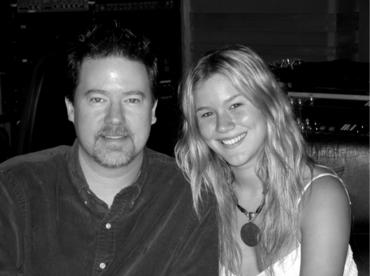
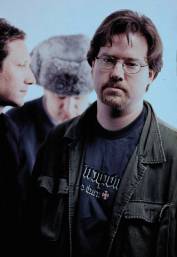
Matt Still


 Matt Still Matt Still
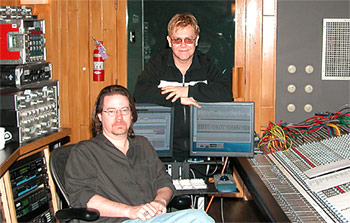
Matt Still & Elton John

IN COSTRUZIONE


Matt Still  ha prodotto con ottimi risultati, insieme ad Elton, l'album The Captain And The Kid nel 2006.  Aveva gia lavorato come tecnico del suono in Aida, Road To El Dorado, Lestat e Peachtree Road, e aveva prodotto il Christmas Album di Elton contenente il duetto con Joss Stone; ma come assistente lo troviamo già in Duets.   E' stato anche cantante nel gruppo Thimoty Pure


Matt Still: From OutKast to Elton John

By Stephanie Jorgl (2004)


Matt Still and Sir Elton John

Despite the fact that Sir Elton John doesn't embrace modern technologies
like email or cell phones, he recognizes the importance of Pro Tools. "Elton
loves working in Pro Tools," says engineer Matt Still. "He's looking to
build a studio/writing room for himself in Venice, Italy, and the one thing
he's said he wants for sure is a Pro Tools system. He respects the value of
Pro Tools: the speed at which you can do things you could never do in the
analog world, and the way you can work with arranging a song."

Still is a versatile engineer who has worked on everything from rap and R&B
records to musicals. His credits include playing on OutKast's Stankonia and
Big Boi and Dre Present...OutKast, plus engineering tracks for OutKast's
award-winning Speakerboxxx/The Love Below and such rock records as Third
Day's debut release. And for the first half of this year, Still worked with
Elton John on his new record, scheduled for release in November 2004.

Classical Beginnings
Still's musical foundation started when he was four, and continued with
classical piano training until the age of 18. His interest in the recording
side of music emerged when his band recorded a demo, but was dissatisfied
with the recording. "I figured, 'Well, I'll just learn how to do this
myself, so I can do my own music and make it sound the way I want it to
sound,'" recalls Still. "So I started hanging around studios."

Matt enrolled at Georgia State's commercial music and recording school, and
began interning at a studio called Soundscape. After a year he started
assisting, and eventually became a full-fledged engineer. Then Bobby Brown
bought the studio and turned it into Bosstown.

Still soon found himself working on the first Arrested Development album,
the first TLC album, and projects with Keith Sweat, Bobby Brown and Whitney
Houston. Eventually he moved into the chief engineer position at Bosstown.
He first met and worked with Elton John on Duets, which proved to be a
pivotal career project for him.

Fast-Track with Duets
"I'd only been engineering for a few years when the Duets sessions rolled
through Bosstown," says Still. "On that album, each track was with a
different artist, and there were different producers for each track. I got
to work on tracks with Little Richard, RuPaul, Gladys Knight, Stevie Wonder,
and Tammy Wynette, among others." With all the different producers and
musicians for each song, Matt became the single common thread throughout the
album.

"I was thrown into the fire on Duets," says Still. "On the very first
session, which was the Little Richard session, I was the assistant engineer,
and got to learn a lot from the engineer that Greg Penny brought in." A few
of the other sessions were done at the last minute, including the RuPaul and
Stevie Wonder sessions.

"I was assisting at the time, and they were looking for an engineer for
those sessions, so they said, 'Well, can you do it?' I was sort of shaking
in my boots, but I said, 'Yes I can!'" remembers Still. "But on the inside,
I was going, 'I hope I can.' But it went well, and it was the first big
session I did where there was a rather large setup, since it was all live
music."

Engineering a full spectrum of live instruments was a different kind of
challenge for Still, who had worked primarily on rap and R&B tracks prior to
Duets. "With R&B and rap, it's a lot of sequencers, drum loops, MIDI, and
keyboards, and one of the only live elements is the vocal," he explains. "So
you didn't have to learn a lot of mic techniques for setting up the drums.
It's usually just recorded direct."

Aida and Onward

"When you're recording someone like Elton, with piano and voice and real
instruments, you immediately hear the advantages of working at 96 kHz."

In 1995, Still got a call from Elton John's management: Elton was going to
write the score to the musical Aida, based on Verdi's opera, and he wanted
Still to engineer the scoring sessions.

"I learned a lot at Bosstown, and I'm really grateful that I was able to
work there with so many great artists," Still says. "But at that point, I
went freelance."

Matt has been working with Elton John fairly regularly ever since. He
engineered during the writing stages of Aida, and subsequently worked with
Elton on a Dreamworks film called The Road to El Dorado, a musical version
of Billy Elliott, and the musical production of The Vampire Lestat.
According to Still, "Billy Elliott is scheduled to open in London in late
2004, and the Lestat musical will probably open in about two years on
Broadway."

OutKast Plus Pro Tools
In contrast with the Elton John sessions, Still's work with OutKast has
offered a different set of challenges and rewards. "With each OutKast album,
I think they're trying to take more risks and expand their sound," he
reflects. "And Dre - I think he's the new godfather of funk. I mean,
everything that comes out of that guy is funky. It's amazing watching him
work in the studio, because he's not scared to go in any direction. He
doesn't like to go down the same path twice, which is great."

Still recorded some live drums and bass and played keyboards on "Bombs Over
Baghdad" and "The Whole World," which is on their Greatest Hits album.

"The guys in OutKast really embrace the technology of Pro Tools, software
synths, and plug-ins," says Still. "I know Andre is really into
Propellerheads Reason these days, too. They use a lot of the Native
Instruments stuff. Dre likes to do a lot of programming - he experiments a
lot by himself, because he has his own Pro Tools rig."

In The Studio With Sir Elton

Matt's most recent mega-project, the upcoming Elton John record, was
recorded at The Record Plant in West Hollywood and Tree Sound Studios in
Atlanta. The sessions were recorded at 96 kHz with a Pro Tools|HD 3 Accel
rig. The system also included three Digidesign 192 I/Os, one 96i I/O, a SYNC
I/O, and a dual 1.25 GHz Power Mac running OS X.

"When you're recording someone like Elton, with piano and voice and real
instruments, you immediately hear the advantages of working at 96 kHz,"
Still notes. In addition to the CD, the Elton John project will be mixed in
surround and released as a SACD and DVD-A - another compelling reason to
record at a high sample rate.

For each piece on Elton's new release, the Pro Tools sessions total between
36 and 110 tracks. "I don't know if we could pull it off with any fewer
tracks," says Matt. "We double or quadruple some tracks, like acoustic and
electric guitars, and some of the percussion. But we never double the
piano."

Playing with Plug-ins and ReWire
When it comes to plug-ins, Still is all about Waves. "I love the Waves
stuff," he says. "I use the Renaissance EQ, the Renaissance Compressor, and
the Q10 EQ is a great EQ. I also use the Renaissance Reverb - I really like
them all. For me, if you have a Pro Tools system, you have to have the Waves
plug-ins. Otherwise, you don't have plug-ins, as far as I'm concerned."

He's also a fan of the Bomb Factory plug-ins. "I like the Fairchild
Compressor, the Moogerfooger stuff, Line 6 Echo Farm - I like its delay,"
says Still. "I use Echo Farm a lot, on anything and everything. I also love
the Eventide H910 and instant flanger - those are great plug-ins. The Reverb
One is also a great reverb." For noise reduction, Still tends to use
Digidesign's DINR or Sonic's No Noise plug-in for Pro Tools.


Elton John's studio

Still loves working with Ableton's Live as well. "Live 3 is great," he says.
"And it was just phenomenal how easy it was to use with Pro Tools. I did
some things on Elton's new album in Live - the fact that it can shape the
sound to the tempo is amazing. In a live situation, the tempo has an ebb and
flow to it - it kind of goes up and down. So we can go in and create a tempo
map of where every bar and beat is in the song, open up Live, program a few
loops and live performances, place the marker where the beat needs to go,
and set the tempo."

And then, of course, there's Auto-Tune. "Auto-Tune is a thing that every
engineer uses, and no artist admits to," he jokes. "Auto-Tune is great when
you get a phenomenal performance and there's just that one little flaw. You
can salvage things that you couldn't otherwise salvage. That's really what I
use it for."

But with Elton, Still says, you usually get the right performance and you
get it in tune. "He's phenomenal at doubling his vocals as well," he adds.
"It's scary sometimes, how good he is. I find that I really have to do very
little tuning - the main goal with him is just getting that phenomenal
performance."

One of the unusual things about working with Elton John is that he writes
the songs in the studio - his song arrangements are not written beforehand.
"He sits down with the words that [longtime Elton John lyricist] Bernie
Taupin gives him and he writes the music, then he goes, 'Okay, I'm ready,'"
explains Still. "We'll record some of the songs live with the band, or on
some tracks he'll play to a drum pattern and we'll overdub everyone else.
We'll do a couple different vocal takes, but once he's finished the song we
have the vocal within an hour and a half of him writing it."

Variety is the Spice of Engineering
After finishing the Elton John record, Matt plans to take some personal time
to record a third record for his prog rock band, "Timothy Pure." "I use a
Digi 001 at home to do my own music," he says. "I use the RTAS versions of
all the plug-ins, and as long as I have a compatible version of the
software, my sessions will open right up on a big Pro Tools|HD system."

If there's one thing Matt Still doesn't need to worry about, it's getting
typecast as an audio specialist who can only work in one genre. Unlike many
engineers, for him, each studio experience really is different.

"One day you're recording guitar, the next day you're recording an
orchestra, and the next day you're recording a rap album," he says. "As an
engineer, the projects you work on aren't really your choice, because you
take the work that comes your way. But I've been really lucky in that I've
done rock albums, I've done rap albums, I've done jazz albums, I've done pop
albums and classical stuff. And because I've worked in such a wide variety
of musical styles, I haven't gotten burnt out on any one type of music."


home
musicians & co.